The Original Setup (And Why It Wasn’t Enough)
Technically fine. Practically… not great!
It required hopping between tools, manually poking around tables, and doing mental gymnastics to figure out usage patterns. No overview. No trends. No visibility. Worse still, time-based questions completely fell apart.
Ask something like:
“How long have you been a UX designer?”
And you’d get:
“I started UX in 2018 after switching from development.”
True… but not the “right” answer.
Or:
“When was your last DJ set?”
The Real Problem: Vector Stores Aren’t Time-Aware
“What”, “why”, “how”, “tell me about” – all perfect.
But anything involving:
- when
- how long
- most recent
- first time
…it hasn’t got a clue!
A vector store doesn’t understand dates. It just understands similarity. So asking “When was your last DJ set?” is meaningless unless there’s a structured place where time actually exists.
The Other Pain: Updating Tim Was a Chore
- Creating JSON files by hand
- Writing tags manually
- Generating summaries myself
- Running Node scripts to upsert everything
Step Back and Rethink things
- A proper admin panel
- Automatic ingestion of content
- Real temporal awareness
The Admin Panel (Finally)
- See how many conversations happened in the last 7 days or 7 weeks
- Inspect what Digital Tim actually knows
- Add, edit, or remove memory
- Test responses
- Take Tim offline
- Switch LLM models
- Review answer success rates
- Review answer response times
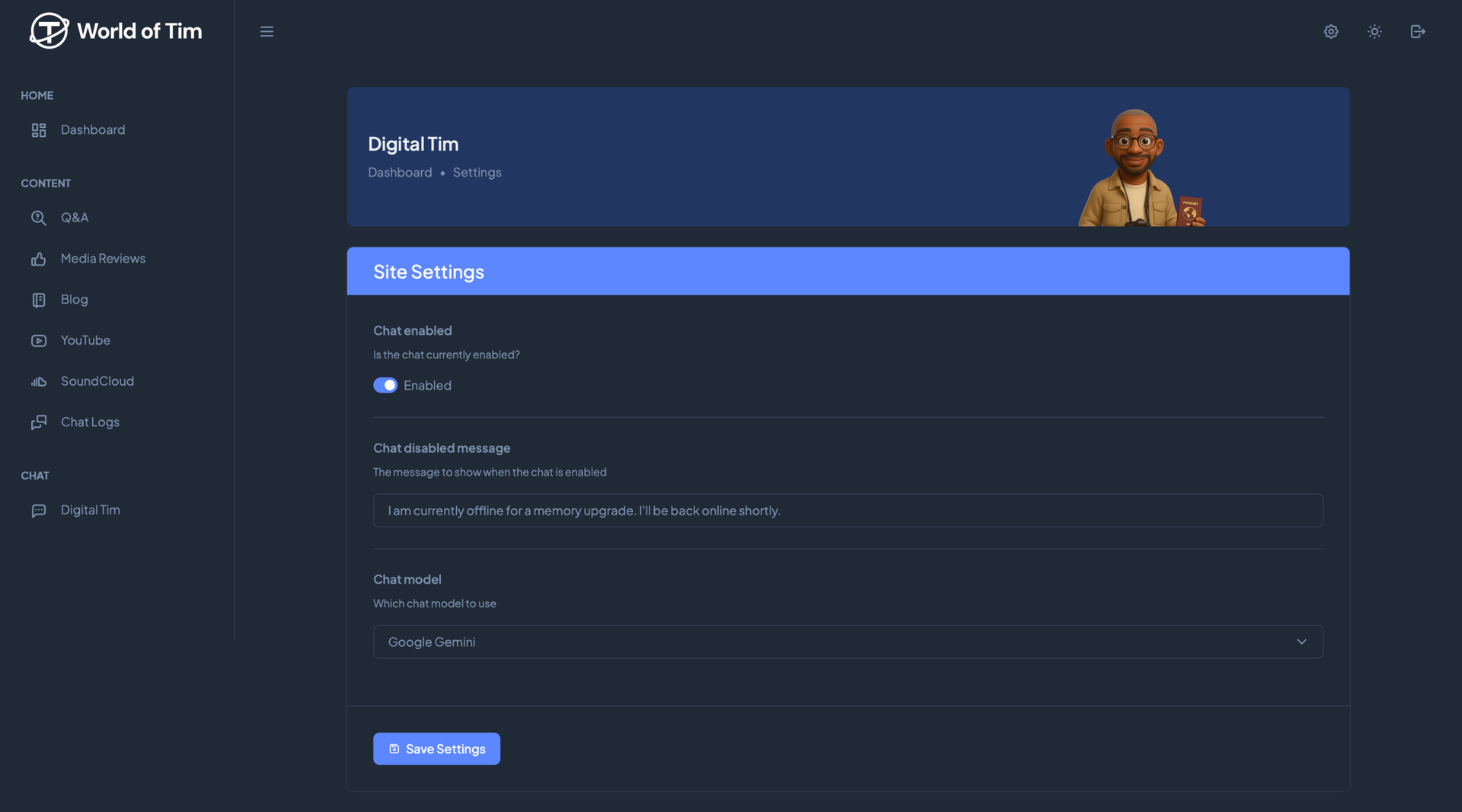
Digital Tim - Settings
Digital Tim - Settings
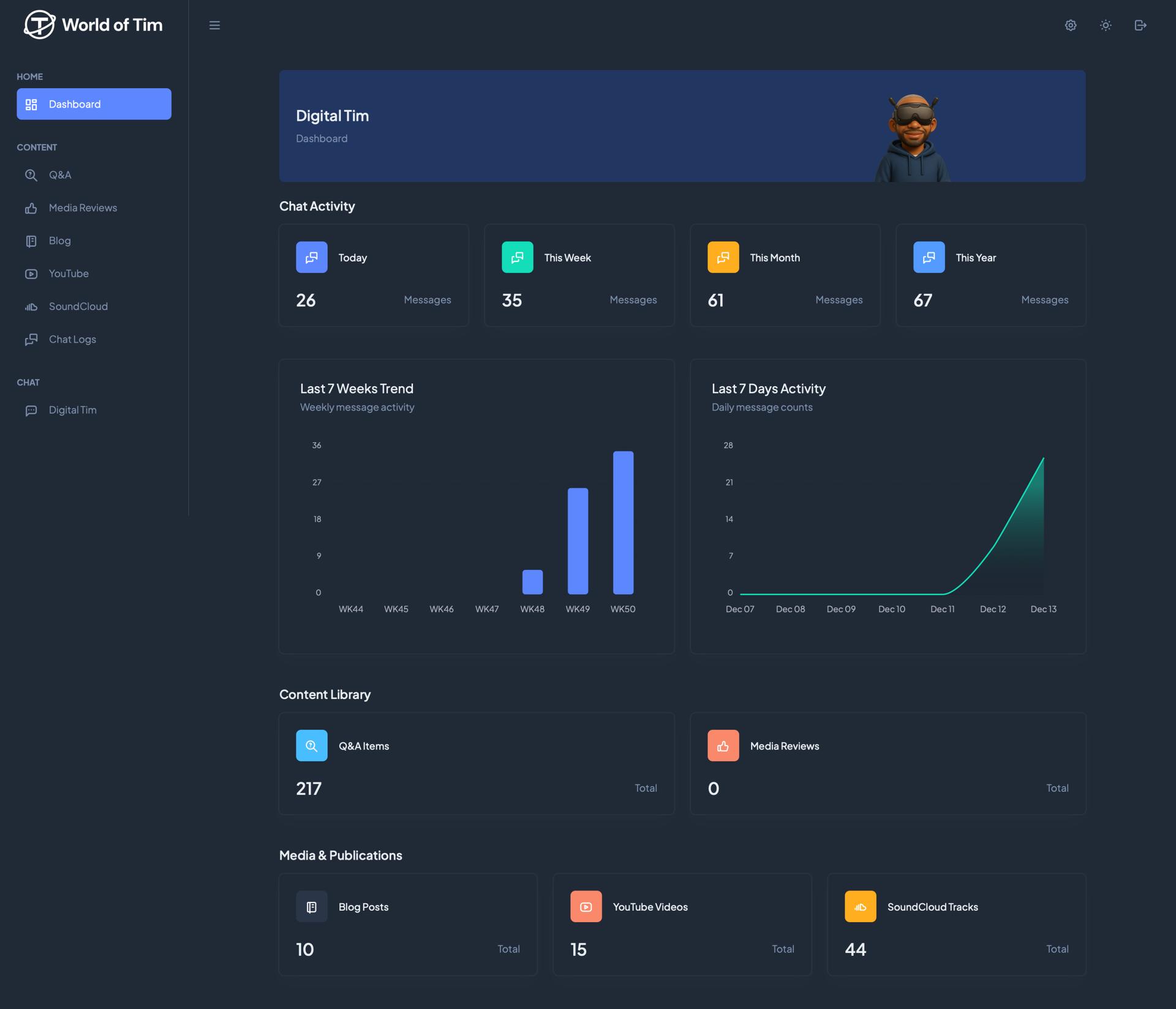
Digital Tim - Dashboard
Digital Tim - Dashboard
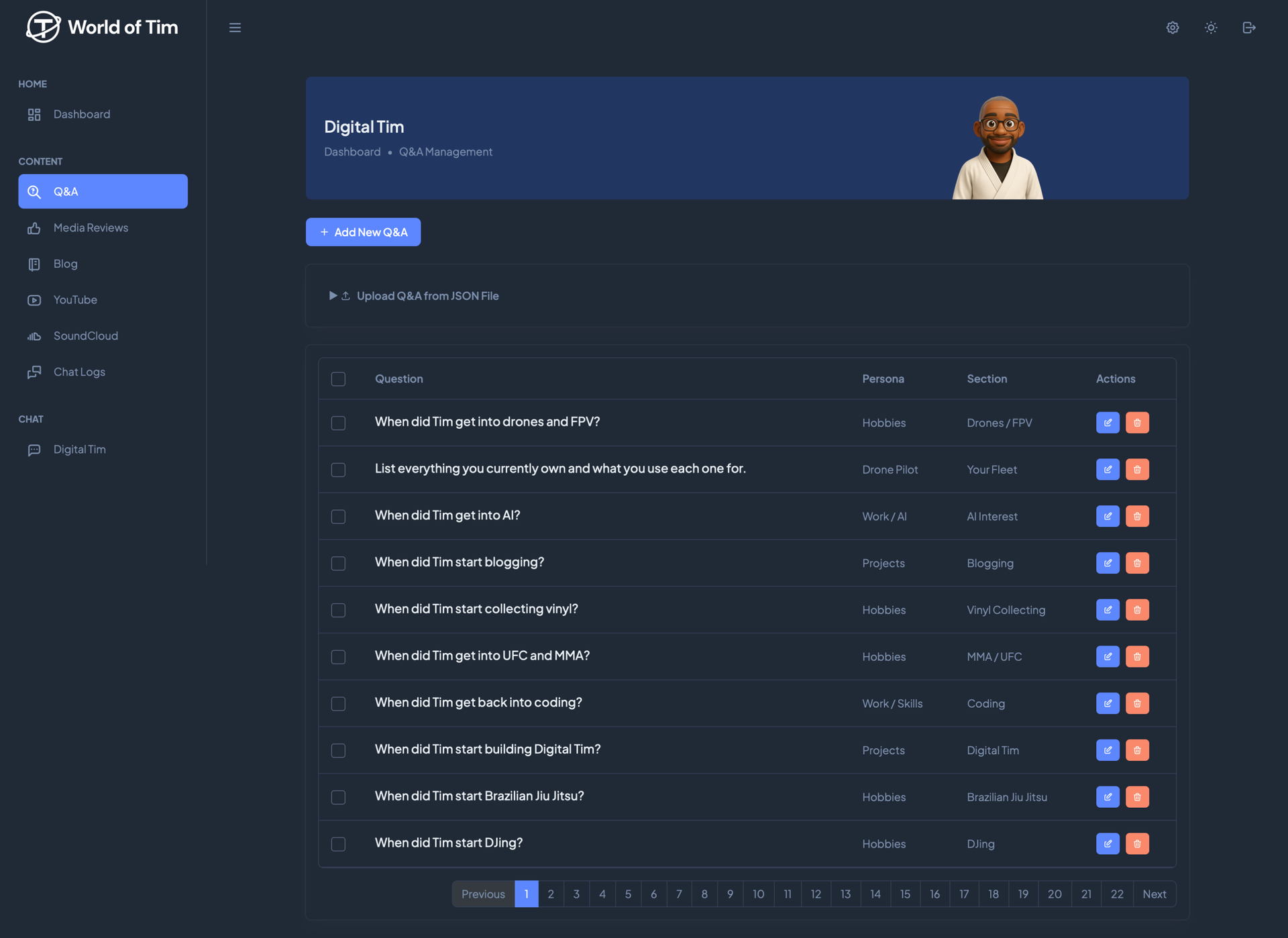
Digital Tim - Q&A Editor
Digital Tim - Q&A Editor
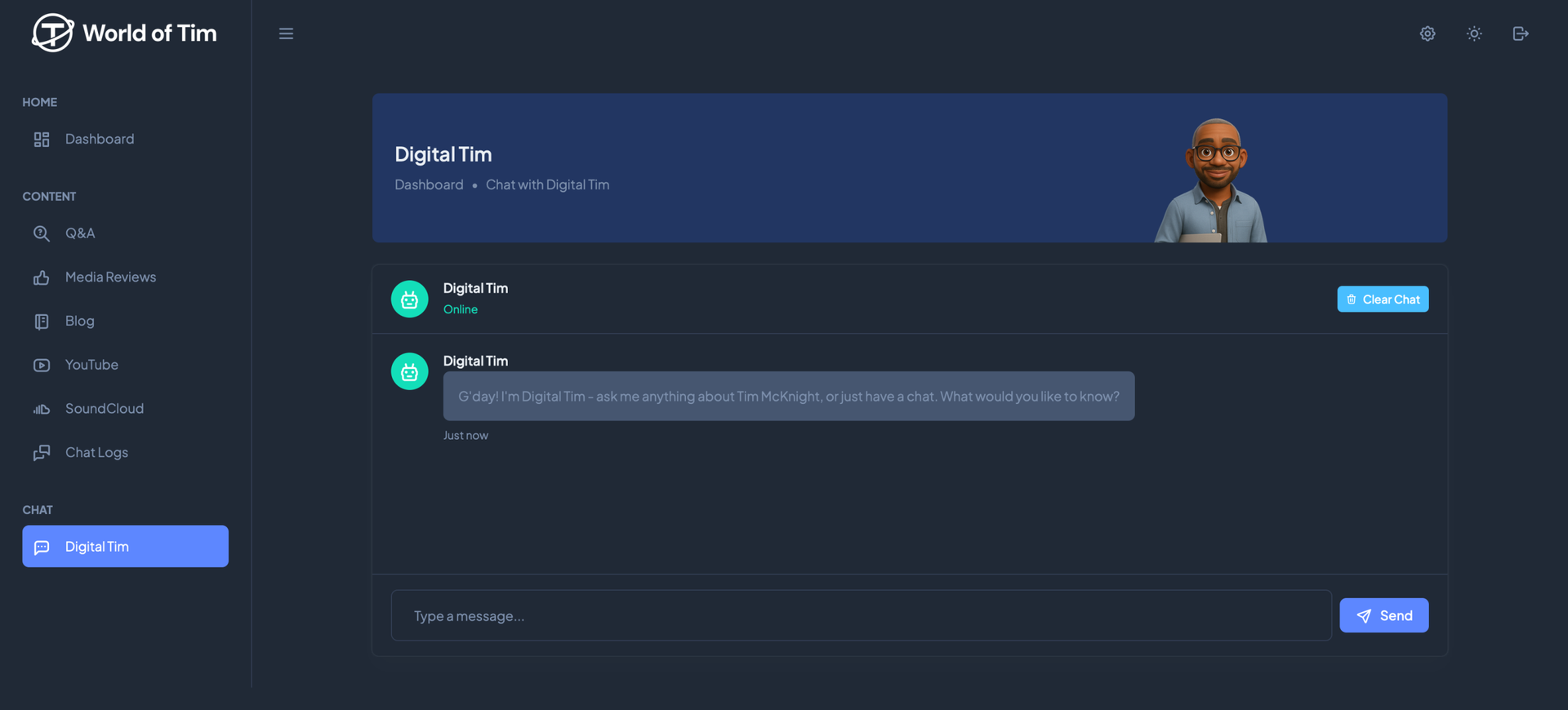
Digital Tim - Chat tester
Digital Tim - Chat tester
Automated Knowledge (No More Manual Ingestion)
I already had the data – I just wasn’t using it properly. My:
- Blog
- YouTube channel
- SoundCloud
…all expose RSS feeds.
So now:
- n8n checks each feed hourly
- New content is detected automatically
- Changes are diffed intelligently
- Summaries and tags are generated by an LLM
- Everything is written to MySQL and Qdrant
If I publish a blog post, I don’t need to do anything else! Within an hour, Digital Tim knows about it. Boom!! How it should be…
Temporal Awareness (The Big One)
Here’s the key shift.
Qdrant is still used for semantic meaning – the what.
MySQL now handles facts, structure, and time – the when.
All Q&A items exist in both places:
- Qdrant for recall
- MySQL for structure
SoundCloud, YouTube, blog posts – same deal.
The updated prompt now:
- Knows today’s date
- Knows which data lives where
- Can query MySQL for timestamps and durations
- Can do date maths when needed
So now:
“How long have you been a UX designer?”
I properly shifted into UX design in 2018, so I’ve been doing it for about seven years now.
“When was your last DJ set?”
My last DJ set was the ‘Cars Hackathon ’24’ mix, which dropped on 26th July 2024. It was a cheeky house set for the closing party at Booking.com.
Tim finally understands time.
What’s Next?
Reviews! I watch a lot of films and TV. That data is going in next:
- Favourite shows
- Favourite films
- Franchise opinions
- Ratings and mini-reviews
The structure is already there – it just needs filling.
Digital Tim 2.0
Digital Tim is now:
- Smarter
- Time-aware
- Easier to update
- Largely self-maintaining
- Actually observable
Less manual effort. More accuracy. Better answers. Boom!
My boy is growing up.